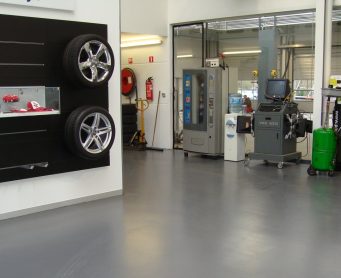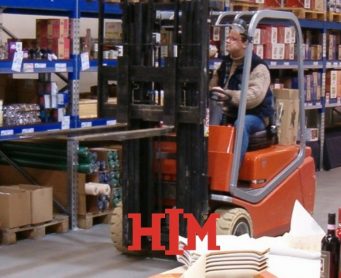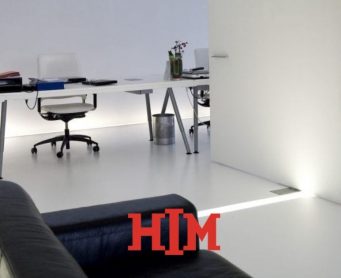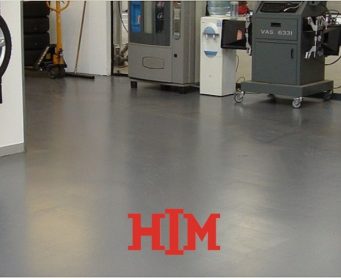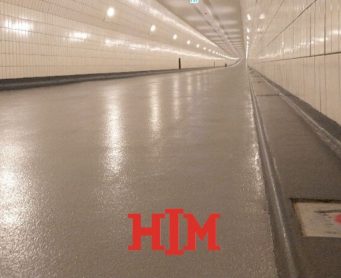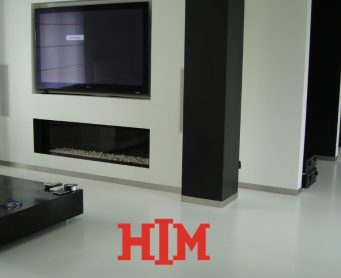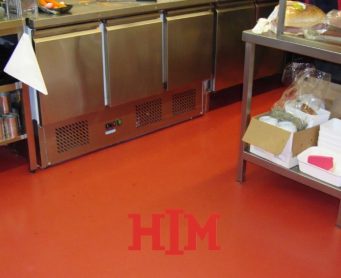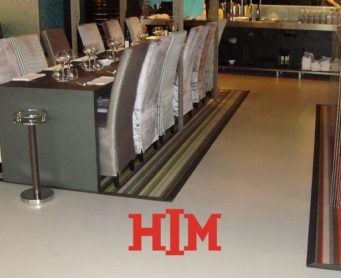
The canteen is the heart of every company or sports club. The canteen floor lays the foundation for this. Where people come together – whether it’s for lunch, meetings, or relaxation – you can expect the floor to ensure the safety and comfort of visitors and staff. With HIM’s floor solutions, you are assured of a solid floor that meets these requirements 100%.
Every company or institution where food is prepared, handled, processed, or sold is legally obliged to develop a food safety plan based on HACCP. A canteen floor can only be put into use when it meets the HACCP requirements. The NVWA conducts inspections randomly, assessing whether the floors contribute sufficiently to ensuring food safety.
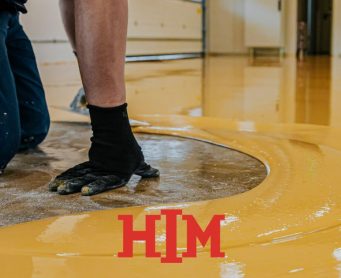
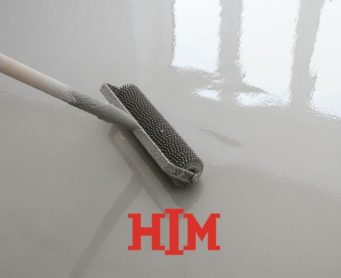
HIM offers various floor solutions that meet the HACCP requirements. Our PU floors and floors made of modified epoxy are ideal for use in canteens, as both types of floors are inherently durable, liquid-tight, and very easy to maintain.
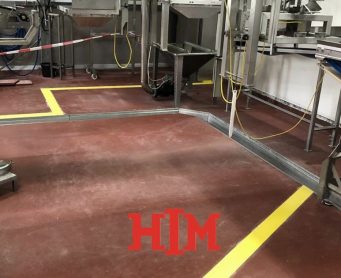
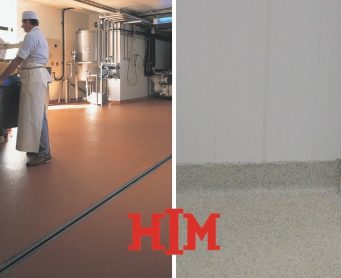
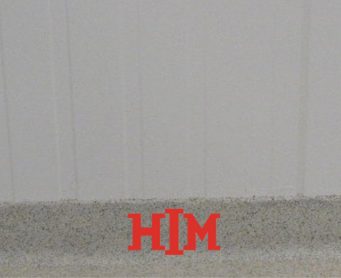
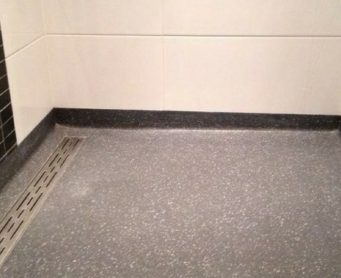
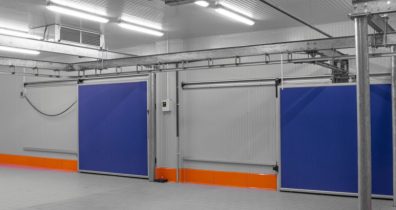
The fact that our canteen floors are seamless and liquid-tight not only looks neat but also ensures hygiene. Combined with coved skirting, dirt cannot accumulate in the corners. This creates a seamless edge and wall connection with the floor.
Floors installed with our coved skirting have the following practical advantages:
Spilled liquids or food residues pose no hindrance with this floor finishing!
The scratch resistance of the floor is also crucial. Sliding tables and chairs often result in scratches on many other types of canteen floors, including wooden parquet floors and PVC floors. Even walking with hard-soled shoes leaves marks on these floors. Our coated synthetic floors have reduced susceptibility to scratches from mechanical loading, allowing the floor to be used as intended!
HIM’s canteen floors meet the strictest requirements for HACCP and indoor use. Our specialists are happy to tell you more about the possibilities of our sustainable and safe floor solutions.
 Reduced scratch sensitivity
Our finish coats make canteen floors less prone to scratches when furniture is moved.
 Decorative
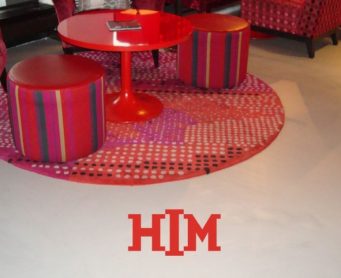
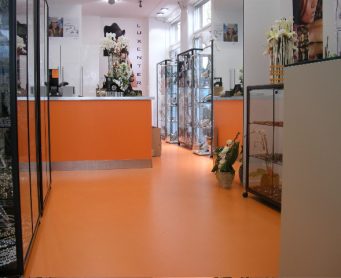
Our atmospheric canteen floors are available in various colors and finishes.
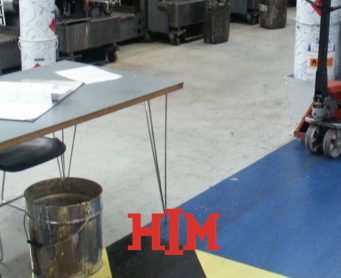
 Anti-slip coating
Prevent slips and falls with an anti-slip coating. This ensures optimal safety.

Not quite sure yet what the perfect poured floor or coating is for your situation? Our experts are ready to assist you. After years of experience and extensive testing in our own laboratory, poured floors hold no secrets for us! Contact us now for personalized advice without any obligations.
Contact me





Category:
Yes, a liquid-tight PU or epoxy floor is suitable for spaces where drinks, food residues and cleaning agents regularly reach the floor. The seamless finish prevents liquids from quickly penetrating the substrate and simplifies daily cleaning. The floor finish must be suited to the products used and the intensity of cleaning. For canteens with kitchen functions or frequent wet cleaning, additional requirements often apply to chemical resistance, slip resistance and finishing around drains.
Category:
A seamless, liquid-tight canteen floor supports hygienic working practices in line with HACCP principles. Because a resin floor has no joints, dirt, moisture and food residues are less likely to build up. Combined with a coved skirting detail, the wall connection also becomes easy to clean. The floor is only one part of overall food safety, however. Cleaning routines, drainage, wall finishes and working practices in the canteen also remain important for a HACCP-compliant layout.
Category:
That depends on the function and load of the space. In a canteen where food and drinks are prepared or sold, hygiene, liquid tightness and ease of maintenance are key considerations. In staff canteens, school canteens and sports canteens, walking comfort, appearance and wear resistance also matter. PU floors and modified epoxy floors are both suitable for canteens. The subfloor, visitor intensity, cleaning method and desired appearance determine which floor system is best suited.