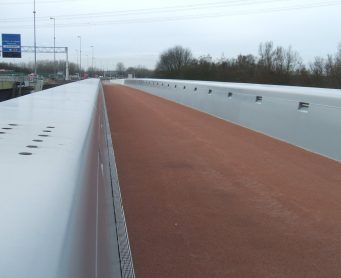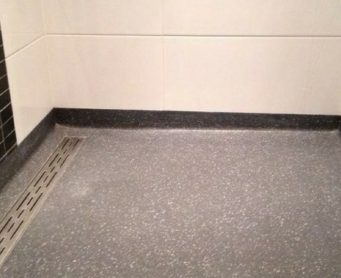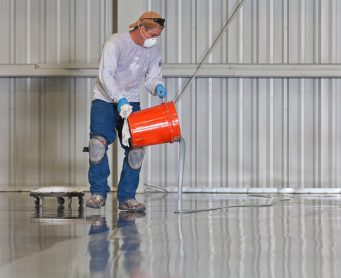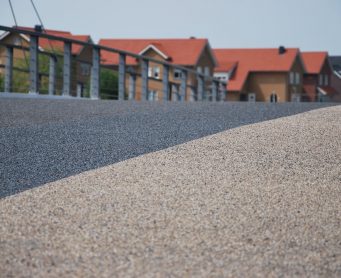
Stalls in riding stables and horse breeding stud farms require solid floors that can withstand the heaviest loads. The floors must meet high quality requirements and the animal must be comfortable with them. Hygiene, sustainability and safety are the most important priorities. With the sealing of existing concrete floors you also get very far, but trowel floors also offer a solution.
In riding stables and horse breeding stud farms, (old) concrete floors can eventually show cracks or crumble. Is the floor in the stable in need of replacement? This is the moment to consider a trowel floor or to seal the existing concrete floor with a moisture-resistant sealer and/or anti-slip layer.
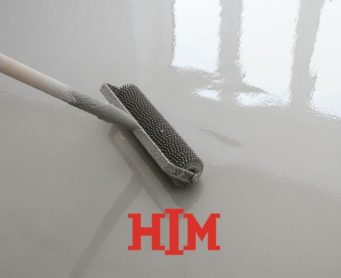
Existing concrete floors often already have a rough surface, but for optimum protection, preservation of the surface and making it dust-free, it is possible to finish it with moisture-resistant and non-slip coating, with a minimal work interruption always pleasant.
Applying finish coats results in such a strong top layer that heavy loads do not damage the floor, even with point loading.
Trowel floors also offer a solution under feed gutters. This floor is very durable and acid-resistant. Acid resistance is an indispensable property, because silage acids can attack the concrete surface. Bacteria have free rein in these damaged areas. With a trowel floor or sealed concrete surface, the feed trough is well suited to microbiological hazards, so that the feed quality and feed intake are optimally preserved.
By thoroughly testing both floors and floor coatings, HIM only brings products on the market that meet the strictest requirements. This way you will never be confronted with surprises and you can quickly start using your stable again.
The floors and coatings from HIM meet the strictest requirements that apply when used in interior spaces. With our high-quality floor solutions you optimally protect your barn.
We are more than happy to share our extensive knowledge and expertise. Our experts are more than happy to give you free advice.
 Acid resistant
Our stable floors are well able to withstand aggressive silage acids.
 Camber
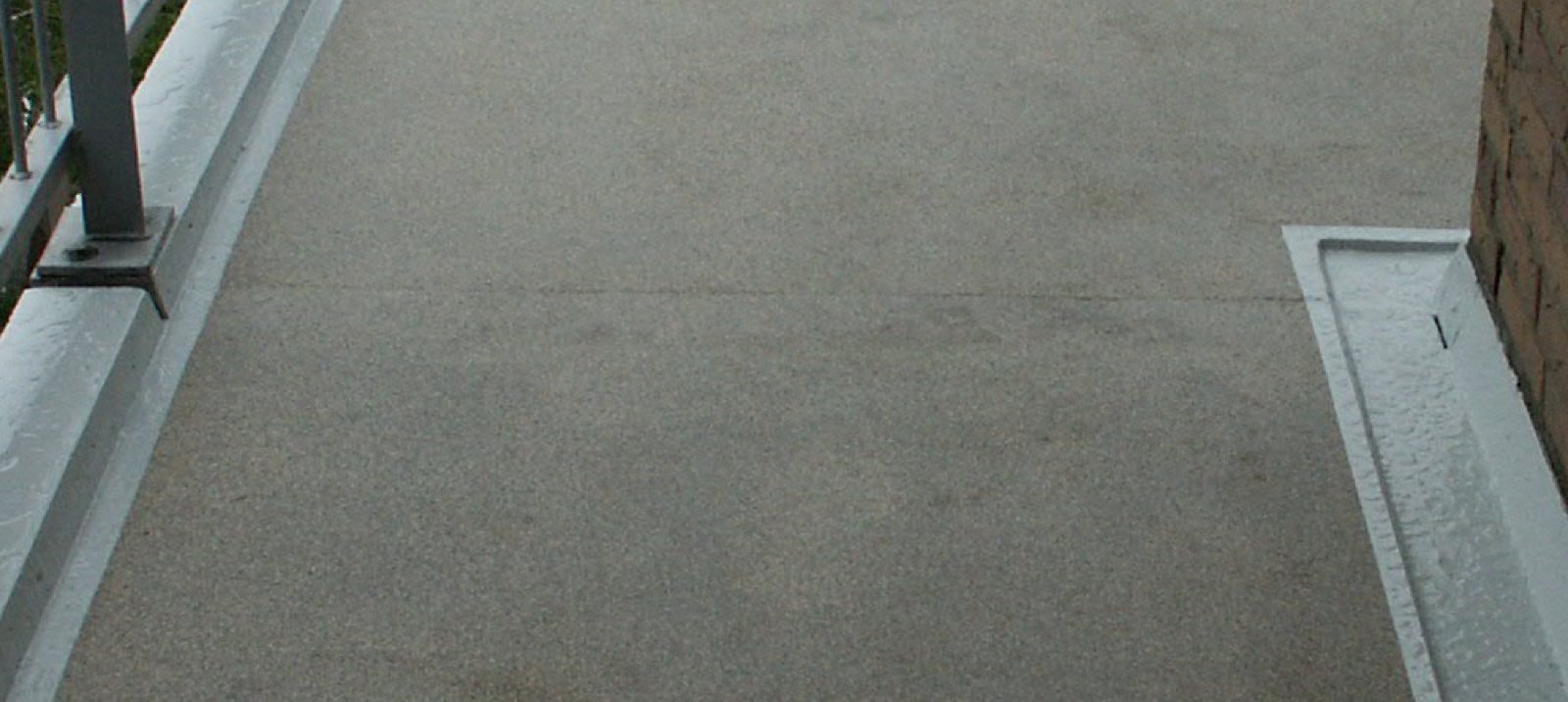
With this type of floor it’s possible to be laid with a slope. It is therefore particularly suitable for the agricultural and food processing industry.
 Anti slip
Our stable floors can be supplied with an anti-slip coating.

Not quite sure what the perfect resin floor or coating is for your situation? Our experts are ready to help you. After years of experience and extensive tests in our laboratory, resin floors have no secrets for us anymore. Contact us now for free tailored advice!
Contact me





Category:
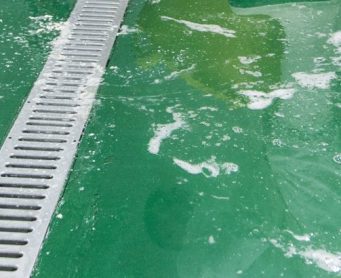
Yes, a trowel-applied floor can be installed to falls. This is valuable in stable areas where water, cleaning liquid or other moisture needs to drain away in a controlled manner. Proper falls reduce standing water, support hygiene and reduce the risk of slipping. Good drainage also prevents moisture from remaining on or in the substrate for extended periods. The required slope and drainage points are determined in advance according to the layout and use of the stable. This ensures the floor supports day-to-day operations.
Category:
A safe stable floor needs sufficient slip resistance, especially in areas that become wet or are heavily used. An anti-slip coating allows the grip to be tailored to the situation. The texture should not be unnecessarily coarse, as this makes cleaning more difficult and retains dirt. The right balance between slip resistance, cleanability and loading differs for each stable area, such as walkways, feed troughs and zones with point loads. By determining the floor system for each application, the stable floor remains both safe and practical to maintain.
Category:
In and around feed troughs, acid resistance is an important selection criterion. Silage acids attack untreated concrete, causing damage where dirt and bacteria can accumulate more easily. A trowel-applied floor is a suitable solution because it can be made wear-resistant and acid-resistant. A properly sealed concrete substrate can also provide protection, depending on the load and condition of the existing concrete. This makes the feed trough more resistant to aggressive substances and makes hygienic maintenance easier.